
Frog Collector Collection Checklist
A calm tracking method for shelves, catalogue rows, eggs, and tonight’s sorting goal.
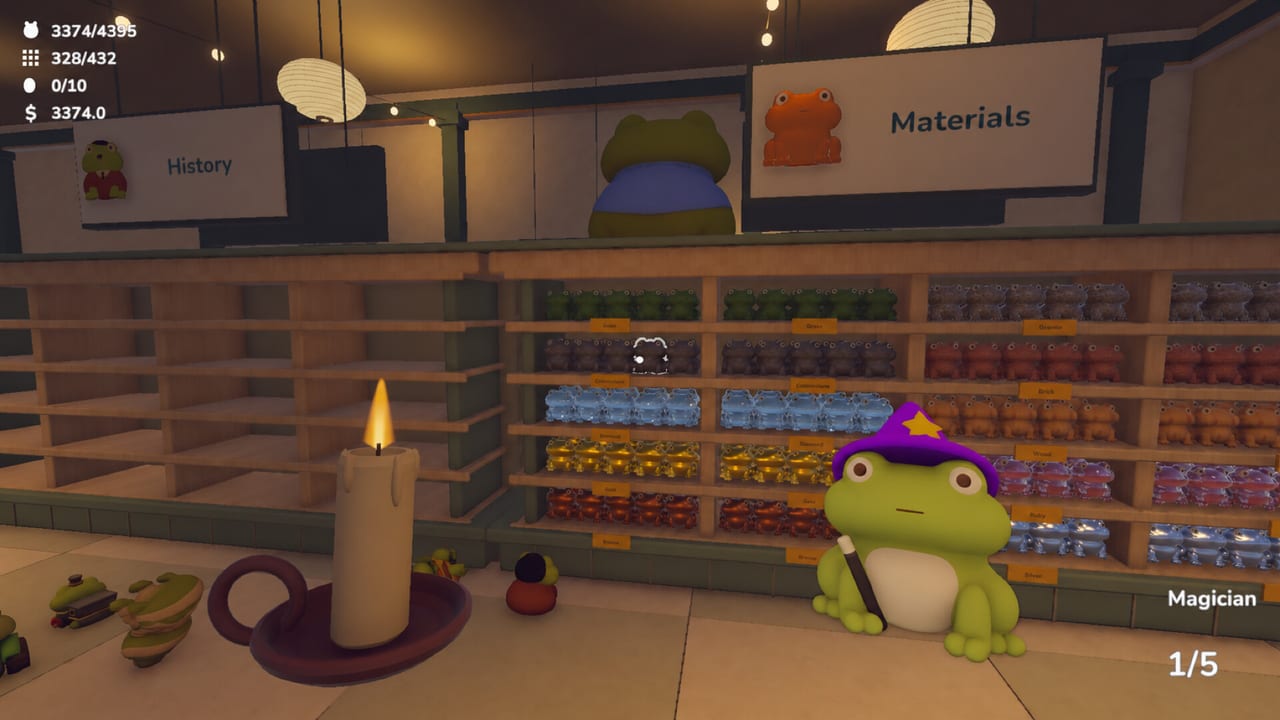
Frog Collector asks you to bring order to a shop overflowing with collectible frogs. With roughly 4,395 figures, themed shelves, a growing catalogue, hidden eggs, shop machines, and a personal display, it is easy to boot the game, wander, and forget what you meant to finish. This checklist method keeps the cozy pace while giving every session a clear finish line.
Use it beside the in-game catalogue—not instead of it. Pair the method with efficient sorting, spend money using the early-game upgrade priority, and review discovery tips in the hidden eggs guide. New players should skim getting started once before building a long checklist habit.
The four checklist columns
Keep a simple note—paper, phone, or text file—with four columns:
- Shelves — themed shelf groups you have started or completed
- Catalogue — gaps, almost-complete rows, or sets you keep rediscovering
- Eggs — hidden eggs found, suspected areas, or “search later” zones
- Session goal — one primary target for the current play block
Limit the session goal to a single sentence. Examples: “Finish the blue aisle shelf row,” “Buy next carry upgrade then clear mismatch pocket near the counter,” or “Ten-minute egg sweep behind the back machines.” When the timer in your head says the evening is done, stop after that goal even if the shop still sparkles with unfinished piles. Tomorrow’s you will thank present you.
Shelf tracking that stays honest
Mark each themed shelf with one of three states:
- Started — you placed at least one correct frog
- Mostly done — only sparse gaps remain
- Complete — the row or theme looks finished and you are not hunting leftovers there tonight
Avoid a fake fourth state like “perfect forever.” Frog Collector lets you retrieve and move figures again, and that flexibility is part of the fun. If you later steal a frog for a better display arrangement, move the shelf back to mostly done without guilt.
Work shelves in clusters. Completing two neighboring themes beats dabbling in six distant ones. Carry upgrades from the upgrades guide make clustered clearing dramatically faster, so update your shelf list after each major purchase.
Catalogue gaps without spreadsheet pain
Open the catalogue at the start and end of a session. Write down only:
- Sets that jumped forward a lot
- Sets that stalled despite nearby piles
- One “mystery silhouette” you keep seeing but cannot match yet
That is enough. You do not need to transcribe thousands of figures. The catalogue already knows the truth; your notes only capture attention.
If a gap keeps stalling, change the process before you change the goal. Use match helpers when available, re-read efficient sorting, and check whether your tier list purchases are lagging behind your ambition.
Egg list: discovery without anxiety
Hidden eggs are a delight layer. Track them lightly:
- Found — noted so you do not re-search the same nook endlessly
- Suspect — a corner, machine area, or quiet prop cluster worth a return visit
- Later — intentionally parked because tonight is a sorting night
Do not turn egg hunting into a completion panic during your first upgrades. Earn carry and match help first, then schedule short egg sweeps between shelf blocks. The hidden eggs guide covers search habits; this checklist only keeps the hunt from overwriting your sorting memory.
Personal display and shop machines
Add two optional lines under your session goal when relevant:
- Display pick — the favorite figure currently in your personal display, or candidates you are comparing
- Machine plan — the next upgrade or shop machine interaction you intend to buy or inspect
These lines prevent the classic cozy-game drift where you admire the display for twenty minutes, buy a low-impact unlock, and forget the shelf you meant to finish. If money is burning a hole in your pocket, re-check the early-game upgrade priority before spending.
A repeatable session template
Copy this template at the top of each note:
Date:
Session goal:
Shelves focus:
Catalogue notes:
Eggs plan:
Upgrade buy?:
Stop rule:
Fill it in sixty seconds, then play. The stop rule matters as much as the goal. Examples: “Stop after this shelf hits complete,” “Stop after the next carry purchase and one test lap,” or “Stop when the next song ends.” Cozy games feel better when endings are intentional.
Weekly review ritual
Once or twice a week, spend five minutes on a wider pass:
- Count how many shelves moved from started to complete.
- Circle catalogue notes that appeared three sessions in a row—those need a dedicated hunt.
- Convert two egg suspects into a short search route.
- Confirm your next upgrade still matches the Upgrade Tier List Hub.
- Skim updates in case a patch changed progression text.
This review is also a good moment to verify performance comfort on denser saves via system requirements, especially if physics piles are growing in your favorite aisle.
Common checklist mistakes
- Tracking everything until notes become a second job
- No session goal, so you wander until decision fatigue hits
- Ignoring upgrades, which makes the same checklist item take forever
- Egg tunnel vision that starves shelf completion and income
- Never marking complete, which makes progress feel invisible
Fix those by shrinking the note, writing one goal, and celebrating complete shelves out loud. The shop looks better when you can point at finished themes.
How this tool connects to the wiki
- Learn the loop in getting started
- Tighten movement with controls
- Spend smarter with upgrades and early-game priority
- Sort cleaner with efficient sorting
- Hunt smarter with hidden eggs
- Return to the tools hub for requirements and future utilities
- Use official links for Steam and Discord
Keep the checklist kind. Frog Collector is about soft lighting, playful physics, and the quiet joy of one more correct placement. Your notes should protect that feeling, not replace it.
Frequently Asked Questions
Quick answers to the most common Frog Collector questions.
Do I need a spreadsheet for Frog Collector?
No. A short four-column note for shelves, catalogue gaps, eggs, and one session goal is enough for most players.
How often should I update the checklist?
Update at the start and end of each session, plus a five-minute weekly review for stubborn gaps and egg suspects.
Should eggs or shelves come first on the list?
Prioritize shelves and income early, then schedule short egg sweeps. See the hidden eggs guide for search habits.
What if my checklist gets too long?
Delete finished lines, keep only active shelves, and rewrite a single session goal before you play again.
Where should I track upgrade purchases?
Use a one-line machine plan in your session note and follow the early-game upgrade priority for spending order.